
June 25, 2026

Free Shipping On Orders Above $75


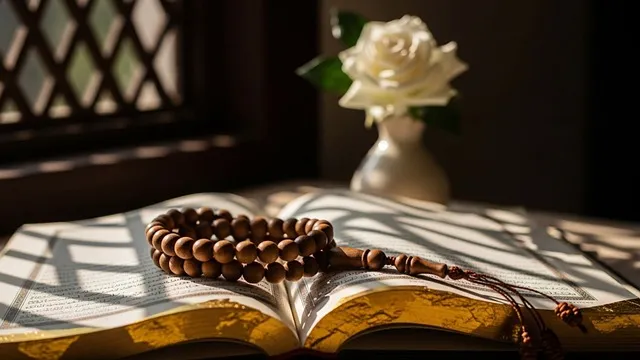


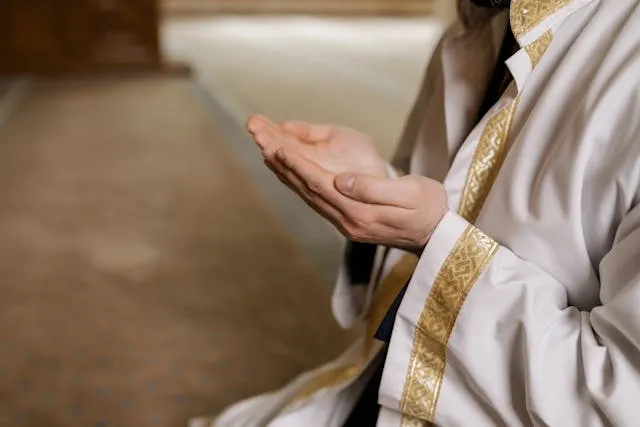
Do you fold the prayer mat right after the final salam? Or do you take the time to slow down during those brief moments with your Lord? That choice, five times a day, is one of the most underrated opportunities in a Muslim's life. The moments immediately after salah are some of the most precious. Making dua after prayer is a beautiful way to deepen our connection with Allah.
Dua after prayer is an act of supplication, praise, and remembrance of Allah right after the obligatory salah. It includes dhikr from the Qur’an and Sunnah, personal supplications, and specific duas the Prophet (PBUH) habitually recited after every salah.
Many of us make dua after prayer in our own words—and that certainly has its own place. But there’s something special about the powerful supplications the Prophet (PBUH) recited after obligatory salah. They were part of his intentional dhikr after salah that he practised every single day. Following his example brings a double reward: the reward of the dhikr itself, and the reward of following the Sunnah.
Here’s a list of 8 sunnah supplications that should be a habitual part of our dua after praying salah. Reciting these doesn’t mean we don’t make our personal duas after prayer. But starting that special dua with these priceless words from the sunnah will surely be a source of more barakah and spirituality.
The dua:

Transliteration: Allahumma antas-salam wa minkas-salam, tabarakta ya dhal-jalali wal-ikram.
Meaning: “O Allah! You are the Bestower of security, and security comes from You; Blessed are You. O Possessor of glory and honour” (Sahih Muslim 592).
This is one of the first things the Prophet (PBUH) would recite after saying the final salam. When he was done with his prayer, he would say Astaghfirullah three times and then recite these words once. When looking for what dua to recite after prayer, this should be the first thing on our list. A short, simple, yet powerful way to praise Allah and seek His protection.
You might wonder: why would he (PBUH) start dhikr after salah with seeking forgiveness—when salah is the best deed of all? The answer is simple: our minds wander. Our focus shifts. Our hearts are never present a hundred percent from the first takbir to the last salam. And even the Prophet (PBUH), who was the closest to reaching perfection in salah, asked for forgiveness right after offering it. Because no one can worship Allah in the absolute, ideal way that He truly deserves.
The dua:
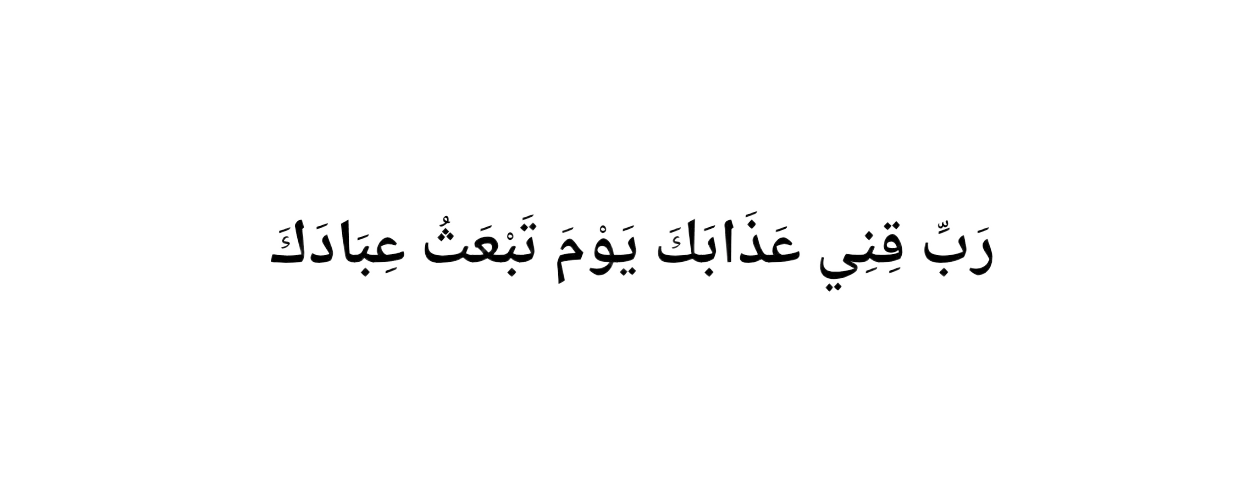
Transliteration: Rabbi qini adhabaka yawma tab'athu ʿibadak.
Meaning: “O Lord! Save me from Your punishment on the Day when You resurrect or gather Your slaves” (Sahih Muslim 709).
This is the best dua to say after every salah because it reminds us of our accountability before Allah. Reciting these words once after every obligatory prayer helps keep us grounded throughout the day. The best part is that it is short and easy, so even children can memorize and recite it without difficulty. If you want your children to start learning any specific dua after prayer in Arabic, this is the one to begin with.
The dua:
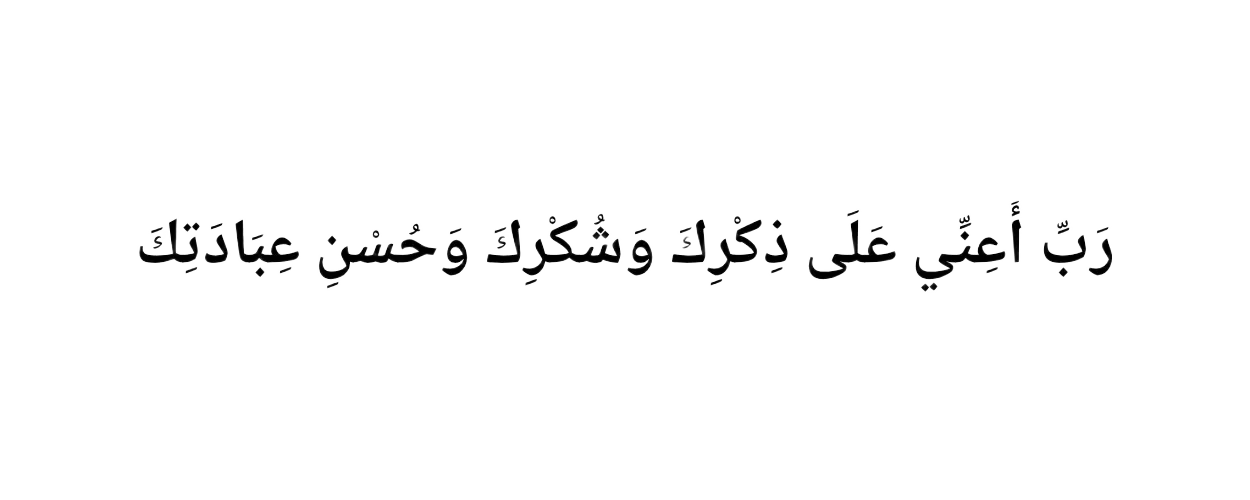
Transliteration: Rabbi a'inni 'ala dhikrika wa shukrika wa husni 'ibadatik.
Meaning: “My Lord, help me to remember You, give thanks to You, and worship You well” (Sunan an-Nasa'i 1303).
This beautiful dua after prayer is the key to practise humility and gratitude at all times. The fact that we’re able to pray every single day is itself a gift from God. Without His will and guidance, we cannot remain steadfast on the straight path. This dua is a great addition to our routine dhikr after salah, asking Allah to keep us consistent in remembering and thanking Him—and seeking His help to keep improving our prayers because they’re never perfect.
The dua:
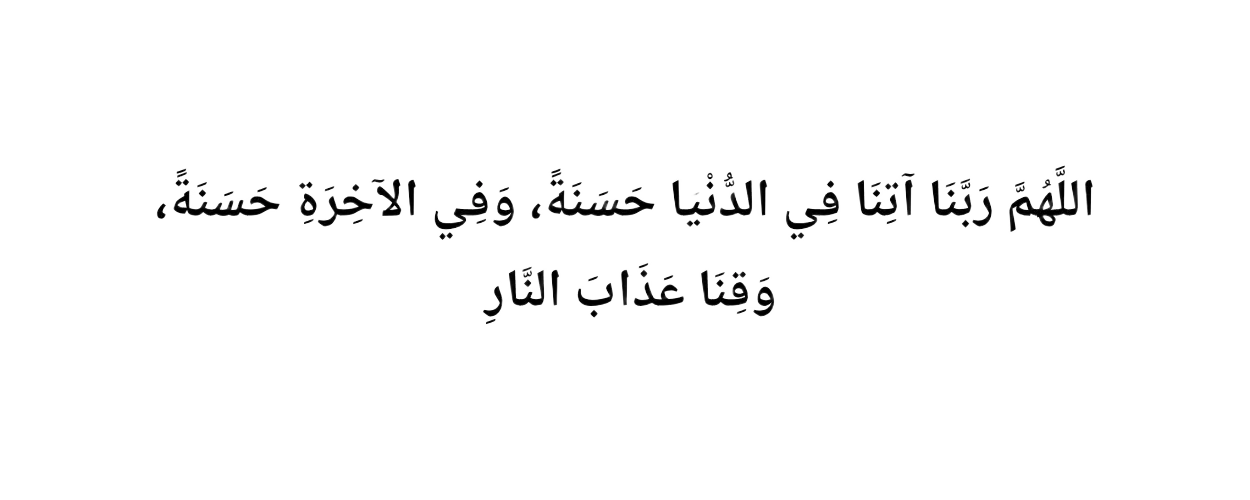
Transliteration: Allahumma rabbana atina fid-dunya hasanatan wa fil-akhirati hasanatan wa qina 'adhaban-nar.
Meaning: “O Allah! Give to us in the world that which is good and in the Hereafter that which is good, and save us from the torment of the Fire” (Sahih al-Bukhari 6389).
This is the one supplication the Prophet (PBUH) made very often. And when you know how much it covers in a few words, you understand why he (PBUH) recited it so much. Good health, cure from illnesses, financial stability, marriage, children, ease on the Day of Judgement, direct admission into Jannah without a reckoning—you name it. All of it is included in this one concise supplication.
This supplication is perfect for dua after prayer. If there’s anything specific you wish to ask for, begin your dhikr after salah with this supplication of the Prophet (PBUH) and then make your personal dua in your own words.
The dua:

Transliteration: Allahummaghfir li ma qaddamtu wa ma akhkhartu wa ma asrartu wa ma a'lantu wa ma asraftu wa ma anta a'lamu bihi minni. Antal muqaddimu wa antal mu'akhkhiru la ilaha illa ant.
Meaning: “O Allah, forgive me my former and latter sins, what I have kept secret and what I have done openly, and what I have done in extravagance; and what You know better than I do. You are the Advancer, the Delayer, there is no god but You” (Sunan Abi Dawud 1509).
We've all been there. The eye-roll we gave when we shouldn’t have. The harsh tone we used with our kid in a moment of exhaustion and later regretted. The salah we delayed beyond its fixed time out of laziness. This single dua after prayer seeks forgiveness for all of it. The hidden and public. The past and future. Even the sins we commit but rarely notice.

Transliteration: La ilaha illallahu wahdahu la sharika lah, lahul-mulku wa lahul-hamdu wa huwa 'ala kulli shay'in qadir. Allahumma la mani'a lima a'tayta wa la mu'tiya lima mana'ta wa la yanfa'u dhal-jaddi minkal-jadd.
Meaning: “There is no god but God alone, who has no partner. To Him belongs the kingdom, to Him praise is due, and He is omnipotent. O God, no one can withhold what You give, or give what You withhold, and the riches of a wealthy person cannot benefit him against You” (Mishkat al-Masabih 962).
Do you know the best way to make a request before Allah? The Prophet (PBUH) told us that it is to start by praising Him (Jami` at-Tirmidhi 3477). And this dua after salah right here is a beautiful way to do just that—praising God, acknowledging His power, and expressing our helplessness before Him. These humbling words also act as a source of peace and comfort, reminding us that no one can bring us any harm or benefit other than Allah.
The dua:

Transliteration: Allahumma inni a'udhu bika minal-bukhli, wa a'udhu bika minal-jubni, wa a'udhu bika min an uradda ila ardhalil-'umuri, wa a'udhu bika min fitnatid-dunya, wa a'udhu bika min adhabill-qabr.
Meaning: “O Allah! I seek refuge with You from miserliness, and seek refuge with You from cowardice, and seek refuge with You from being brought back to geriatric old age, and seek refuge with You from the afflictions of the world, and seek refuge with You from the punishment of the grave” (Sahih al-Bukhari 6370).
This is a complete dua seeking protection against all kinds of harm. Not just the harm from the outside world, but also the dangerous traits we carry within us—the cowardice that keeps us from doing the right thing, the miserliness that distances us from barakah, physical ailments like old age, and the afflictions in both this world and the hereafter. Imagine making this dua after prayer fives times daily. It’s like surrendering ourselves to Allah’s complete protection against all negativity and trials.
The dua:

Transliteration: Allahumma inni as’aluka ʿilman nafiʿan, wa rizqan ṭayyiban, wa ʿamalan mutaqabbalan.
Meaning: “O Allah, I ask You for beneficial knowledge, goodly provision, and acceptable deeds” (Sunan Ibn Majah 925).
The fajr salah is a special one, and so is the dua after praying fajr. The Prophet (PBUH) used to make this dua specifically after offering the fajr prayer. And there’s a reason why it belongs at the beginning of the day. It asks for three of the most basic and vital things we need daily:
You don’t have to memorize all of these duas after prayer. Pick one or two that resonate the most with you and memorize them for now. Here are a few ways to start the habit of reciting them daily (and eventually memorizing them naturally):
Keep these duas with you when you’re about to pray and recite them from your notes after finishing each salah. This repetition will help you memorize all these duas quite naturally in a few weeks inshaAllah.
Children can also learn these duas after salah easily in the same manner. You can make the experience more engaging for young minds by involving them in a fun activity:
Dua after prayer allows us to transition more mindfully from offering salah back into our routine tasks. It helps us stay focused on our true purpose and approach our interactions and routine with a faith-first mindset. These duas after salah are not meant to be seen as a burden or a mechanical routine. They are an intentional step in keeping our hearts close to Allah’s remembrance amid our busy schedules. The sunnah dhikr after salah in the list above is a simple way to invite more barakah into our lives, strengthen our connection with Allah, and remain consistent in our preparation for the akhirah.
A: The Prophet (PBUH recited several specific duas after every obligatory salah. One of his most significant duas after salah (which he made right after the final salam) was to say Astaghfirullah three times followed by a beautiful supplication for peace and security:
Transliteration: Allahumma antas-salam wa minkas-salam, tabarakta ya dhal-jalali wal-ikram.
Meaning: “O Allah! You are the Bestower of security, and security comes from You; Blessed are You. O Possessor of glory and honour” (Sahih Muslim 592).
A: The Prophet (PBUH) recited a specific dua after Fajr prayer, which is a beautiful way to set the intention for the day ahead:
The dua:
Transliteration: Allahumma inni as’aluka ʿilman nafiʿan, wa rizqan ṭayyiban, wa ʿamalan mutaqabbalan.
Meaning: “O Allah, I ask You for beneficial knowledge, goodly provision, and acceptable deeds” (Sunan Ibn Majah 925).
A: Dhikr after salah refers to the remembrance of Allah— through specific phrases, Qur'anic verses, and sunnah supplications—after completing the obligatory prayer. It is important because it helps us connect with Allah on a deeper level and transition more mindfully into our routine. When done with a present heart and a focused mind, dhikr after salah helps us slow down and see salah as more than just a routine.
A: Yes—personal dua can be made in any language. While the Sunnah duas after prayer have their own reward and are worth memorizing in Arabic, you can make your personal duas in your own words. The best practice in this regard is to start the dhikr after salah with Arabic supplications from the Sunnah and then proceed to making personal duas in your own language.
A: The best way to help children learn any dua after praying salah is to make it a shared and engaging learning moment. Instead of mere repetition for learning the words, involve them in fun activities to teach them duas after salah. Make dua cards together that children can keep near their prayer mat. Books like Sido's Prayer Beads and Mama Musoo's Dhikr Plants also open beautiful conversations about why Muslims make dhikr and what it feels like to talk to Allah.

.svg)

.webp)

$
12.99
12.99
12.99
£
10.49
12.99
12.99
12.99
12.99
12.99
Best Seller
July 27, 2026
Best Seller
Family
Values

$
13.99
13.99
13.99
£
11.49
13.99
13.99
13.99
13.99
13.99
Best Seller
July 27, 2026
Adventure
Values

$
13.99
13.99
13.99
£
11.49
13.99
13.99
13.99
13.99
13.99
Best Seller
July 27, 2026
Adventure
Values


.webp)
.webp)
.webp)
Be the first to know about our latest books, coupons, and giveaways!


.svg)


.webp)


Sign up today and get 10% off your first order!
Use this discount code at checkout: TENOFF